TOGETHER, WE CAN PREVENT SUBSTANCE USE DISORDER.
The Prevention division of the Mississippi Public Health Institute brings together a variety of personal and professional resources designed to educate and empower Mississippians.
MSPHI and YOU — PARTNERS FOR SUCCESS
About the Partners For Success (PFS) Grant
Partners For Success (PFS) is a grant administered by the Mississippi Public Health Institute designed to reduce substance use from alcohol, opioids, marijuana, and tobacco, among others. The program uses a data driven public health model called the Strategic Prevention Framework to improve assessment, capacity, planning, implementation, and evaluation of prevention strategies. MSPHI’s five-year award of this grant funds activities such as community coalitions, youth-focused prevention programs, media campaigns, training for providers and local partners, and more.
Empower yourself with these practical tips pulled from our resources.
-
Empower Yourself. Be Good to Yourself.
Positive thoughts and positive actions make us feel good about ourselves. When we have a positive self-concept, we are happy and successful; we feel good about how we look, what we are doing, and how we treat others. -
Build a Healthy Self Concept
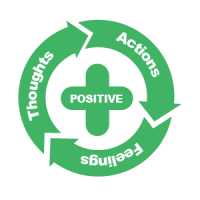
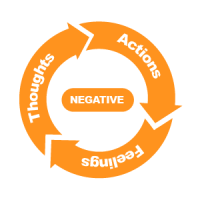
There is a positive way to do everything. The Positive Action Thoughts-Actions-Feelings about Self Circle illustrates this philosophy that positive thoughts lead to positive actions, positive actions lead to positive feelings, and positive feelings lead to more positive thoughts and the circle continues. But beware, the circle can also be applied to negative actions or actions that do harm. It graphically describes the connection between cognitive, affective, and behavioral learning. We learn that self-concept means the way we think and feel about ourselves and that families, friends, and our own experiences influence our self-concept.
-
Make and Maintain Healthy Relationships
We treat people the way we would like to be treated. That’s the key to getting along with others. Create a list of the ways you wish to be treated, and make that list your “Code of Conduct.” Thinking about and understand how you would like to be treated tells you everything you need to know about how you should treat others. Everyone likes to be treated with kindness, empathy, fairness, honesty, respect, courtesy, patience, love, and cooperation. These positive ways of treating others helps everyone get along—and belong—and that includes you. -
Be Honest with Yourself and Others
Self-honesty means being aware of our reality and understanding our true strengths and weaknesses. This means always telling ourselves and others the truth, keeping promises and actually doing what we say we will do, and admitting and taking responsibility for our mistakes instead of blaming others or making excuses. Being honest with ourselves and others helps us stay mentally healthy and in touch with reality. By applying the positive action of self-honesty, we find the inner strength and knowledge to stand up for who we really are. Then we feel good about ourselves and what we do, no matter what others say and do.

TAKE BULLYING BY THE HORNS
Don’t Be A Bully
We might think being mean to someone will make us feel bigger. But negative actions disappoint us. After we’ve bullied someone, we might get a little burst of satisfaction, but it goes away in a snap. Negative actions are unsatisfying, after all. They don’t make us happy or help us feel good about ourselves. Then we might do something even meaner trying to feel better about ourselves! But negative actions will always let us down. And the more negative actions we do, the worse we feel about ourselves.
That’s why it’s so important to steer clear of bullying actions — whether our own actions or the actions of others — to keep us from being our best self. The negative circle of bullying is painful, no matter what part we play in it. Unfortunately, it hurts far more to be bullied than to be a bully.

Bullying Takes Many Forms
Some bullying is meant to irritate or demean and can be physical. Bullying can in your face online or via messaging and social media. But other forms of bullying are more subtle —like peer pressure. This means letting others pressure us socially into doing or consuming something we should not. We must always remember that we can make our own choices. We do not have to do what those around us pressure us to do.
—WHEN PEER PRESSURE CROSSES THE LINE—
Sometimes peer pressure is verbal like someone saying, “Come on, just try it.” But peer pressure can also be as subtle as a joint or vape being passed around, a group chat that makes negative or harmful actions seem okay, or a party where “everyone is doing it” — and making whatever they’re doing sound like it’s not a big deal. But here is the truth: not everyone is doing it. And you don’t have to either. Whether it’s something risky or dangerous, a mind-altering substance, or worse, the choice is always yours.
Peer pressure
can be obvious:
“Don’t be scared.”
“Everybody does it.”
“You only live once.”
“It’s not a big deal.”
Peer pressure can
also be subtle:
– Nobody wants to be the only outcast to say no.
– You might not want people to think you are judging them.
– You might think you’ll lose friends if you don’t join in.
– Just saying yes is easier than explaining yourself.
Quick ways to get
out of the moment:
“No thanks.”
“I’m not feeling it right now.”
“I’ve gotta drive.”
“I’ve got work/family stuff.”
Real friends do not pressure you to risk your future.
If someone keeps pushing after you say no, that is not someone being confident — that is pressure. You do not owe anyone an explanation for protecting your health, your goals, your family, your future, or your peace. You can also blame the exit on something simple like a parent, coach, boss, test, curfew, or just a desire to go home. You don’t have to give the perfect speech. You just have to get yourself out safely.
Be the friend who makes it easier for others to say no.
Sometimes one person saying, “I’m good,” is just the encouragement for everyone else to say it too. Your “no” can protect you. It can also protect somebody else — and you may never know who needed you to be the first one to step back.
EMPOWER YOURSELF:
Avoid Harmful Substances
Popular Does Not Mean Safe
The more you know, the more you’ll want to say NO. Just because something is talked about online, passed around at school, or made to look normal does not mean it is harmless. Some substances can affect your mood, memory, motivation, reaction time, mental health, and decision-making. According to CDC data, high-risk youth substance use can lead to outcomes such as injury, school dropout, criminal justice involvement, and loss of life.
AVOID! Vapes and Nicotine
Vapes can look harmless because they come in flavors, small devices, and packaging that does not always look like tobacco. But many vapes contain nicotine, which is highly addictive and can affect the developing teen brain. If a vape has nicotine, it is not “just water vapor.” If it has THC, it is still a drug. And if you do not know where it came from, you do not really know what is in it. Don’t mess with it.
AVOID! Alcohol
Even though it’s legal for those over 21 years old, alcohol is still a drug, and it’s actually a very dangerous one. Alcohol can affect judgment, reaction time, mood, coordination, and decision-making. It can also put people in risky situations faster than they expect.
AVOID! Prescription Drugs and Fake Pills
This is one of the biggest risks right now: a pill can look real and still be fake. Pills can easily be made to look like prescription medications such as oxycodone, Xanax, or Adderall, but DEA warns they may actually contain fentanyl, methamphetamine, or other deadly drugs. CDC data reveals that from 2020 to 2024, 75% of overdose deaths among youth ages 10–19 involved fentanyl, often because of counterfeit pills or other substances containing fentanyl without the person knowing.
HARMFUL SUBSTANCES: A Mississippi Youth Snapshot
- In Mississippi, 17.9% of high school students reported using an electronic vapor product in the past 30 days in 2023.
- Among Mississippi youth ages 12–17, 5.5% reported drinking alcohol in the past month, and 6.6% reported using illicit drugs, including marijuana, in the past month, based on 2022–2023 state estimates.
- In 2025, past-year alcohol use was reported by 11% of 8th graders, 24% of 10th graders, and 41% of 12th graders nationally.
- Nationally in 2025, cannabis use in the past year was reported by 8% of 8th graders, 16% of 10th graders, and 26% of 12th graders.
Follow this simple rule: If it did not come from a pharmacy, prescribed to you, in your name, do not take it.
AVOID! Marijuana, THC, Edibles, and Carts
Marijuana is not just “weed” anymore. You may see THC in vapes, carts, gummies, brownies, drinks, waxes, or other products. Some products can be stronger than expected, and edibles can take longer to kick in, which can lead people to take too much. CDC data reveals that cannabis affects parts of the brain involved in memory, learning, attention, decision-making, coordination, emotions, and reaction time. CDC also notes that cannabis use can have lasting effects on the developing brain when use begins in adolescence, especially with regular or heavy use.
AVOID! Cocaine, Meth, Heroin, and Other Drugs Some drugs may seem less common, but they are still dangerous. Even when teen use of many substances is lower than it used to be, the drug supply is more unpredictable. That means experimenting can carry a much bigger risk than someone may realize. What’s in that pill or powder? How do you know? You don’t. So avoid at all costs.
SUBSTANTIVE THINGS TO REMEMBER...
- You do NOT have to do, take or try anything to prove you're a fun person. You're fun anyway.
- You do NOT have to risk your future to keep a friend or a group of friends. (Are they really your friends?)
- You do NOT have to explain why you said no. (Just keep saying no until it sticks.)
- You do NOT have to handle pressure alone. Surround yourself with like-minded friends.
If you or someone you know needs help with alcohol, drugs, or mental health concerns, contact SAMHSA’s National Helpline. It's FREE, confidential, and available 24/7 at 1-800-662-HELP (4357)
Complete our form to request contact or more information.
Request free educational resources or information, or get answers to your questions about our substance use prevention programs. A member of the MSPHI Prevention team will be happy to contact you if requested.